Latest Promotion

Latest Posts
OFFICIAL

5 Ways to help someone struggling with their mental health | Mental Health Season – BBC Ideas
Subscribe and 🔔 to the BBC 👉 https://bit.ly/BBCYouTubeSub Watch the BBC first on iPlayer 👉 https://bbc.in/iPlayer-Home 5 Ways to help […]
OFFICIAL

Imagine There Was No Stigma to Mental Illness | Dr. Jeffrey Lieberman | TEDxCharlottesville
Dr. Jeffrey Lieberman, Professor and Chair of Psychiatry at Columbia University and past President of the American Psychiatric Association, envisions […]
OFFICIAL
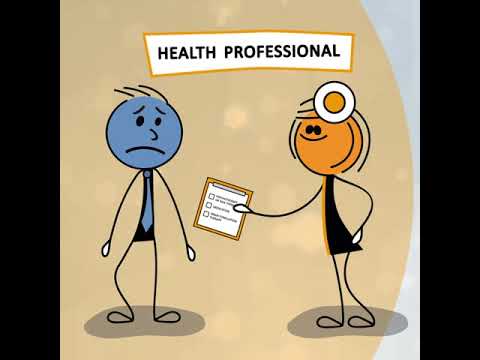
Mental Health Minute: Depression
Got 60 seconds? Take a mental health minute to learn about depression. For more information on depression, please visit: www.nimh.nih.gov/depression.
OFFICIAL

Top Tips for Supporting National Mental Health Awareness: A Friendly Guide
“Discover easy, effective ways to support National Mental Health Awareness with our guide, ‘Top Tips for Supporting National Mental Health […]
OFFICIAL
Rave Psychology Tips for BG5/HD Pros – Radical Transformations Promo
Sign up for Radical Transformations with Laveena at the International Human Design School: https://ihdschool.com/courses/1717/radical-transformations-clinic

Mentally healthy workplaces: addressing mental health stigma
Helping to identify stigma in the workplace.
Share on
Life After Prison for People With Mental Illness | The Released (full documentary) | FRONTLINE
In this 2009 follow-up to the groundbreaking documentary “The New Asylums,” FRONTLINE examined what happens to people who are living with mental illness when they leave prison. (Aired 2009)
This journalism is made possible by viewers like you. Support your local PBS station here: https://www.pbs.org/donate
In 2005’s “The New Asylums,” FRONTLINE filmmakers Karen O’Connor and Miri Navasky went deep inside the Ohio prison system as it struggled to provide care to thousands of inmates with mental illness.
In 2009’s “The Released,” they returned to Ohio to tell the next chapter in this story. That year, more than 700,000 people were expected to be released from prison across the U.S., more than half of them dealing with mental illness. Typically, these people would leave prison with a bus ticket, $75 in cash, and two weeks’ worth of medication to treat their illness. Studies from the time showed that nearly two-thirds of people with mental illness released from prison — often poor and out of touch with friends and family — were rearrested within 18 months. “The Released” offered an intimate look at the lives of people with serious mental illnesses who were released from prison but struggled to remain free.
Explore additional reporting related to “The Released” on our website:
https://www.pbs.org/wgbh/frontline/documentary/released/
#Documentary #Prison #MentalHealth
Subscribe on YouTube: http://bit.ly/1BycsJW
Instagram: https://www.instagram.com/frontlinepbs
Twitter: https://twitter.com/frontlinepbs
Facebook: https://www.facebook.com/frontline
FRONTLINE is produced at GBH in Boston and is broadcast nationwide on PBS. Funding for FRONTLINE is provided through the support of PBS viewers and by the Corporation for Public Broadcasting. Additional support for FRONTLINE is provided by the Abrams Foundation, Park Foundation, the John D. and Catherine T. MacArthur Foundation, the Heising-Simons Foundation, and the FRONTLINE Journalism Fund, with major support from Jon and Jo Ann Hagler on behalf of the Jon L. Hagler Foundation, and additional support from Koo and Patricia Yuen.
CHAPTERS:
00:00 – A Tragic Cycle for People With Mental Illness
9:56 – For People With Mental Illness, a Difficult Transition to Post-Prison Life
19:29 – The Revolving Prison Door
26:28 – A Model for Community Treatment of People With Mental Illness
34:36 – For People With Serious Mental Illness, ‘A Huge Social Failure’
43:27 – What Comes After Prison Release for People With Serious Mental Illness?
52:47 – Credits